
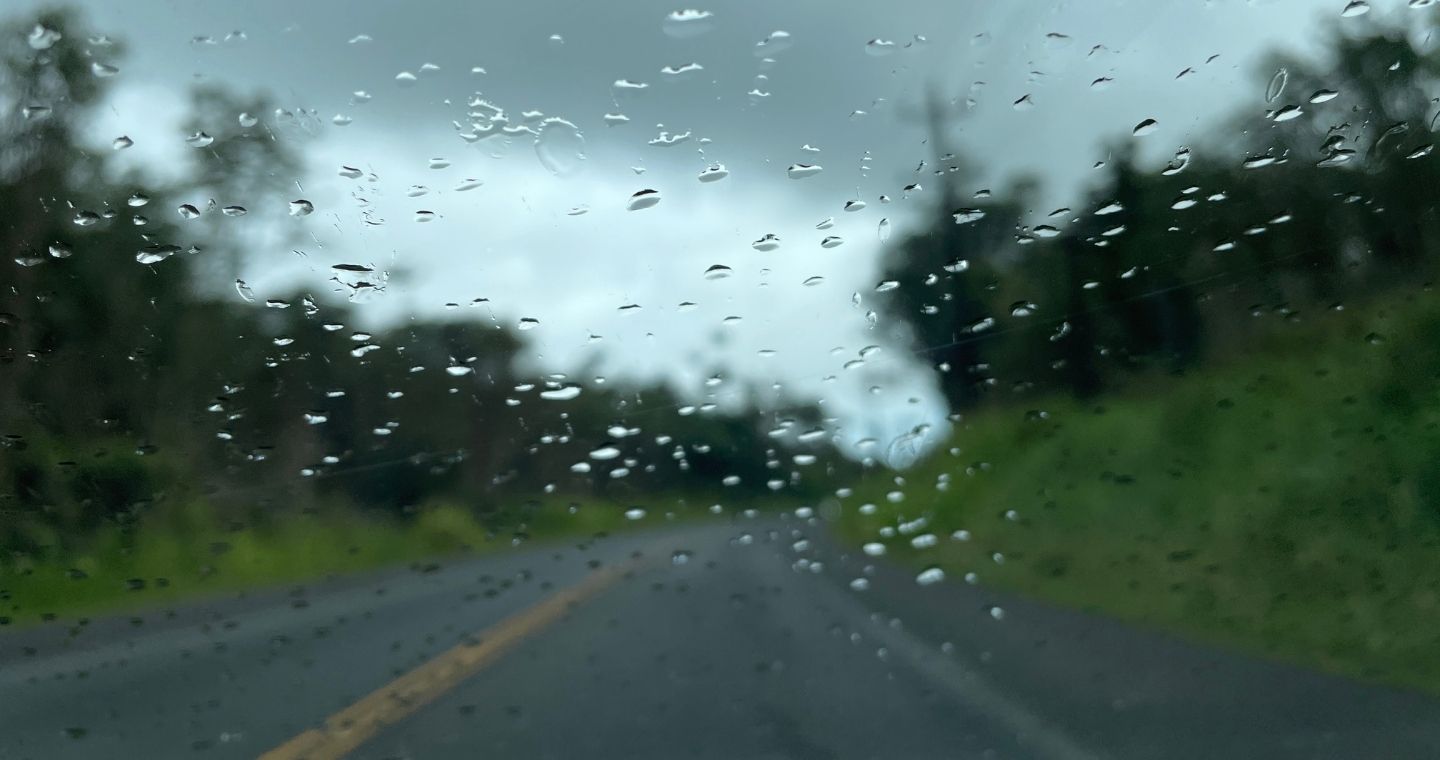
You wake up in Volcano Village, look outside, and it’s raining. Now what? Do you still go to Hawaiʻi Volcanoes National Park? Change your plans? Wait it out?
Most of the time, rain does not mean giving up your day.
Volcano is a rainforest environment, and rain is part of visiting this side of Hawaiʻi Island. The weather can also change quickly as you move through different elevations and parts of Hawaiʻi Volcanoes National Park.
Our advice to guests visiting our Big Island bed and breakfast is usually simple: dress for the weather and keep exploring. A rain jacket, long pants, and good walking shoes can make all the difference.
First, Check the Conditions
Before deciding that rain has ruined the day, check what is actually happening. A passing shower or a misty morning is very different from a storm bringing heavy flooding or high winds.
Hawaiʻi Volcanoes National Park advises visitors to be prepared for rapidly changing weather, including rain, fog, and wind. Check the park’s official website or app for current alerts and trail closures rather than making a decision based solely on what you see outside your window.
During severe weather, the National Park Service may close certain roads or trails for safety. If those warnings are in place, let official guidance dictate your plans. But if the park is open, a little moisture shouldn’t hold you back.
Explore the Park by Car
If the park is open and conditions are safe, a wet day is the perfect excuse for a scenic drive. Taking a driving-focused approach gives you flexibility: you can pull over at scenic overlooks when the rain eases, spend less time exposed during heavy downpours, and continue taking in the sights.
Crater Rim Drive and Chain of Craters Road are the park’s two primary roads for visitors. Crater Rim Drive can be cool, windy, and rainy sometimes, and we recommend bringing rain gear, jackets, and appropriate shoes when getting out at viewpoints. Chain of Craters Road takes you through the multiple Hawaiian climates as it descends from the Kīlauea summit area toward the coast. Quite often, you’ll leave a cool, rainy summit in Volcano and drive straight into dry, clear skies near the coast.
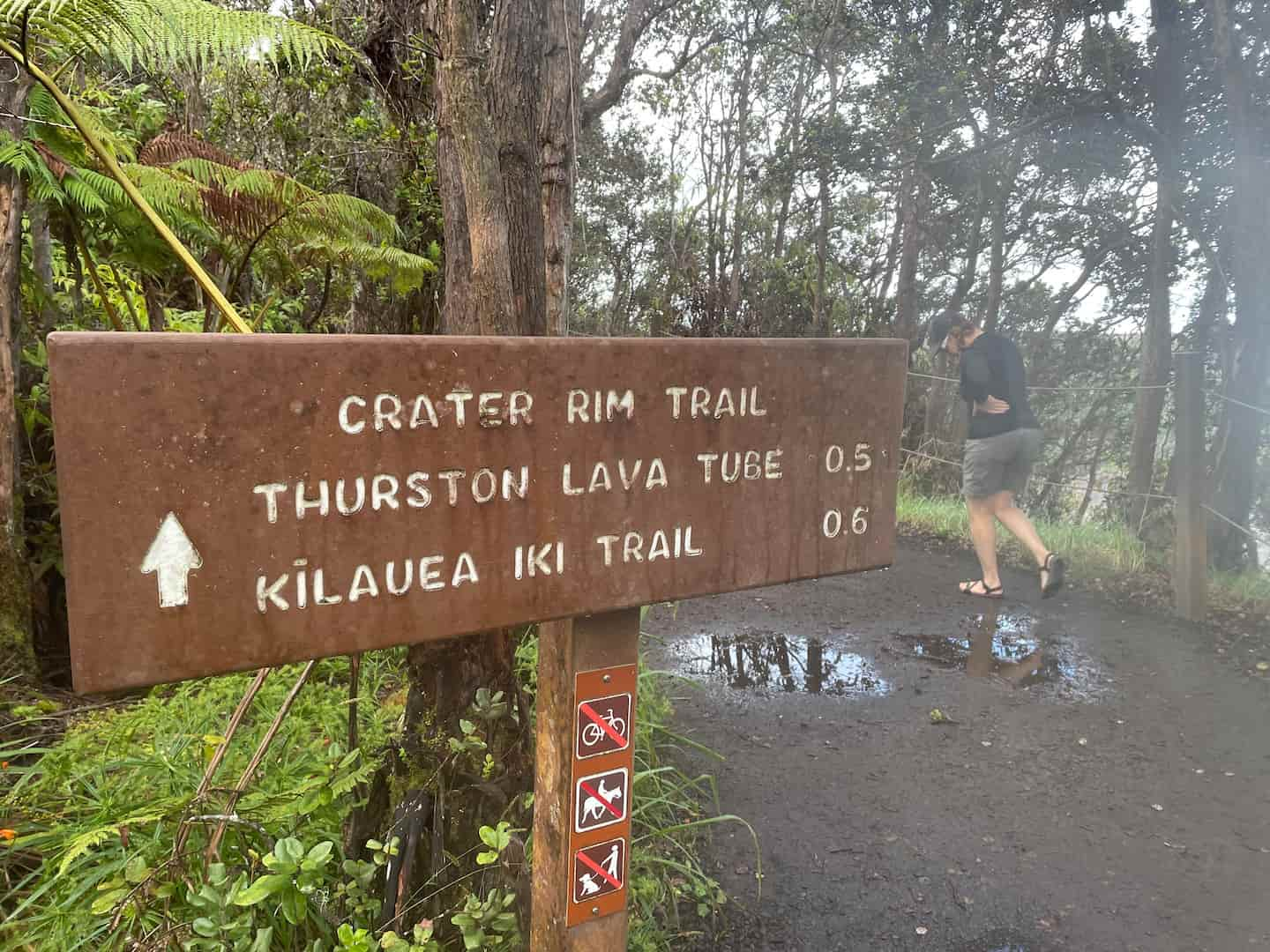
Should You Hike in the Rain?
This depends on the weather intensity and trail conditions.
A light shower isn’t automatically a reason to cancel every walk. In fact, hiking through the rainforest in a gentle mist can actually make the rainforest feel even greener, with the leaves and ʻŌhiʻa trees looking especially vibrant. However, persistent heavy rain, strong winds, or poor visibility require more caution.
If you do head out on the trails, what you wear matters. Rain gear and sturdy footwear aren’t just about staying dry. They keep you comfortable and sure-footed on damp rock and soil. Keep a light rain shell in your daypack even if the morning starts clear, as mountain weather can change quickly.
If conditions become severe, follow park alerts and closure notices rather than trying to stick to an itinerary simply because you planned it in advance.

What If It’s Raining Too Hard?
There are days when spending hours outside simply isn’t appealing, even if conditions haven’t reached the point of a major weather closure. That’s a good time to explore another side of Volcano.
The Volcano area has a strong arts community, giving you options that don’t depend on spending the entire day on a trail. You can spend a wet morning browsing local artwork at the Volcano Art Center, visiting nearby artisan galleries like 2400 Fahrenheit, or chatting with local makers.
A rainy day is also an invitation to slow down. Unwind with an in-room massage, step into the hot tub under the cool canopy, or curl up with a good book by the fireplace while the rain falls outside.
Don’t Automatically Rearrange Your Whole Trip
Travelers sometimes see rain in the forecast and immediately try to rewrite their entire itinerary.
We generally suggest making decisions based on the actual conditions of the day rather than a generic forecast. If you’re staying in Volcano for a few nights, you have natural flexibility. Save your longer hikes for a clearer morning, and use wetter stretches for scenic drives, gallery visits, or a quiet afternoon at the lodge.
What to Pack for a Rainy Day in Volcano
You don’t need an elaborate rainy-day kit, but a few basics can make the difference between continuing your day and heading back early.
Bring a rain jacket, long pants and sturdy, comfortable walking shoes. Layers are also useful because temperatures at the Kīlauea summit can be considerably cooler than at sea level. The National Park Service advises visitors to be prepared for rain and changing temperatures when exploring the park.
Keep rain gear with you even when the morning looks promising. Weather can change while you’re out exploring.
When Rain Really Should Change Your Plans
There is a clear line between a rainy day and an unsafe one.
Severe storms can bring falling branches, sudden flash flooding, poor road visibility, and hazardous trail conditions. When severe weather strikes, Hawaiʻi Volcanoes National Park will temporarily close affected areas.
That is not the time to “brave the weather.” Always honor park closures, stay out of restricted zones, and check current air-quality updates if volcanic activity is occurring during your visit.
A Rainy Day Can Still Be a Volcano Day
If you wake up to rain at Volcano Village Lodge, don’t assume your plans are over.
Check the park conditions, pull on a rain jacket, and if conditions are safe, head out and explore. Whether you’re watching the mist roll over crater rims, discovering local galleries, or simply enjoying the cool mountain air, rain is simply part of spending time in Volcano.
And at the end of the day, Volcano Village Lodge gives you a quiet place to dry off, warm up, and decide what tomorrow looks like.
Rain may change how you spend a day in Volcano Village, but it doesn’t have to take the day away. Stay with us and experience the beauty of the rainforest, rain or shine.