
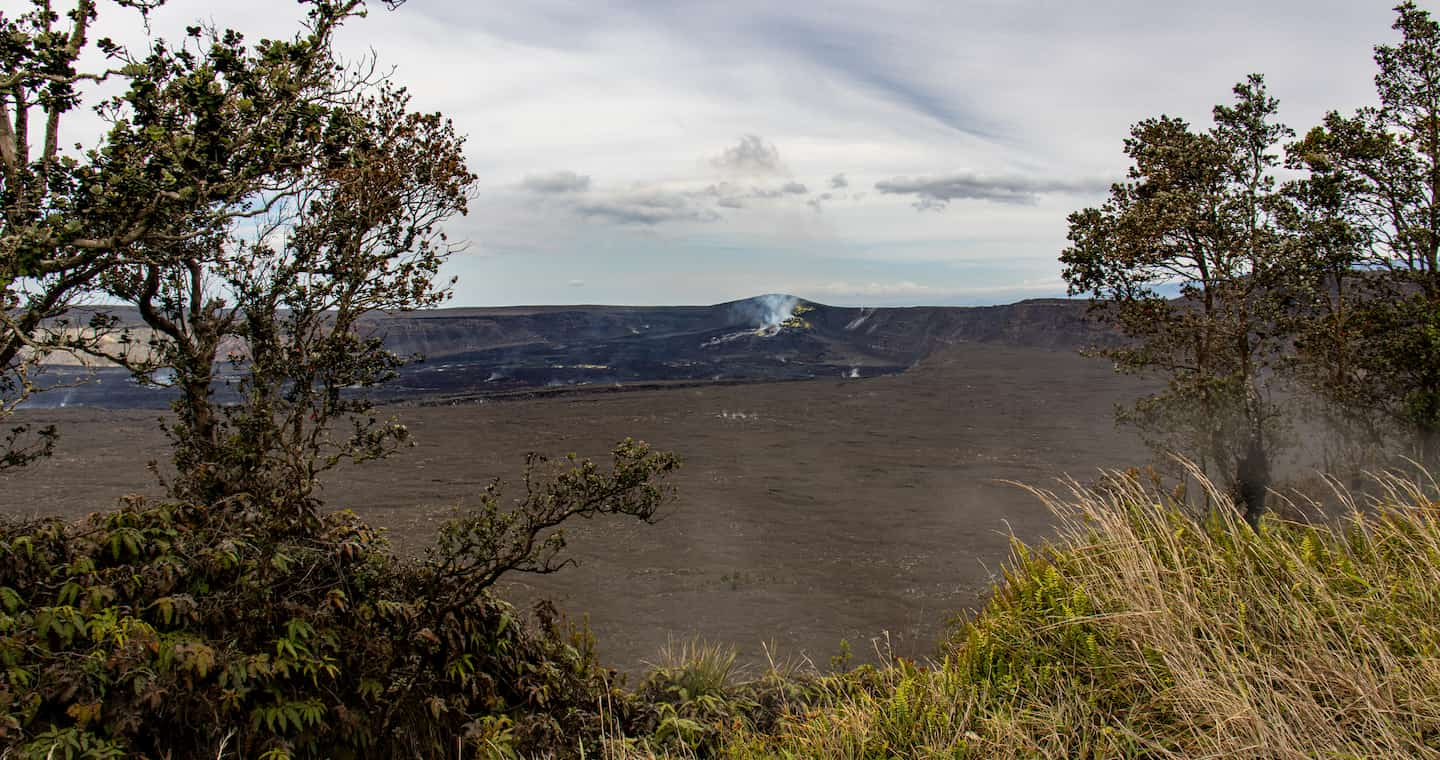
Planning a visit to Hawaiʻi Volcanoes National Park and wondering if it’s worth going when there’s no lava to see? While watching an active volcanic eruption is an extraordinary experience, there’s much more to this remarkable national park than glowing lava.
You can walk through a rainforest, explore a lava tube, stand along the rim of Kīlauea’s summit caldera, and see landscapes shaped by volcanic activity over thousands of years. Even when there’s no visible flowing lava, the park offers experiences you won’t find anywhere else on the Big Island.
At our Big Island bed and breakfast, we’re fortunate to be located just minutes from the park. We encourage visitors to think of an eruption as a possible bonus rather than the reason to plan their entire visit. Here’s what you can experience when Kīlauea is quiet and how to make the most of your time.
Is Kīlauea Still Active When There’s No Visible Lava?
Yes! Kīlauea is one of the world’s most active volcanoes, but that doesn’t mean lava is always visible.
Volcanic activity can change from day to day. Eruptions may pause, resume, or stop, and sometimes the activity takes place where visitors cannot safely see it. A quiet summit doesn’t mean the volcano is extinct or that nothing is happening beneath the surface.
It’s also important to understand the difference between an active volcano and an active eruption. Kīlauea can remain active even when there is no lava flowing or erupting at the surface.
If seeing lava is important to your trip, check the USGS Hawaiian Volcano Observatory for current eruption updates. The National Park Service also provides information about park conditions, closures, and visitor access.
What Can You See at Hawaiʻi Volcanoes National Park Without Lava?
One of the most interesting things about Hawaiʻi Volcanoes National Park is how dramatically the scenery changes as you explore. You can move from lush tropical forest to exposed volcanic rock, see enormous craters, and discover how plants gradually return to landscapes transformed by eruptions.
Here are several places worth including in your visit.
Walk Through Nāhuku (Thurston Lava Tube)
The Nāhuku tunnel formed when the outer surface of a lava flow cooled and hardened while molten lava continued moving beneath it. Once the lava drained away, it left a hollow passage that you can walk through today.
The short walk to the tube takes you through a beautiful native rainforest filled with ferns and towering trees. The contrast between the green forest and the dark volcanic tunnel makes this one of the park’s most memorable stops.
The trail includes stairs and uneven or wet surfaces, so wear shoes with good traction.
See Kīlauea’s Summit Caldera
You don’t need an eruption to appreciate the scale of Kīlauea.
From designated viewpoints around the summit, you can look across the enormous caldera and see the dramatic changes caused by volcanic activity. The landscape is a reminder that this is an active geological environment, even when the surface appears quiet.
For first-time visitors, the summit area is an excellent introduction to the park. Rather than rushing from one viewpoint to another, take time to read the interpretive signs and understand what you’re looking at.
The park’s overlooks and trails can change as conditions evolve, so use the current National Park Service map to choose accessible viewpoints.
Hike the Kīlauea Iki Trail
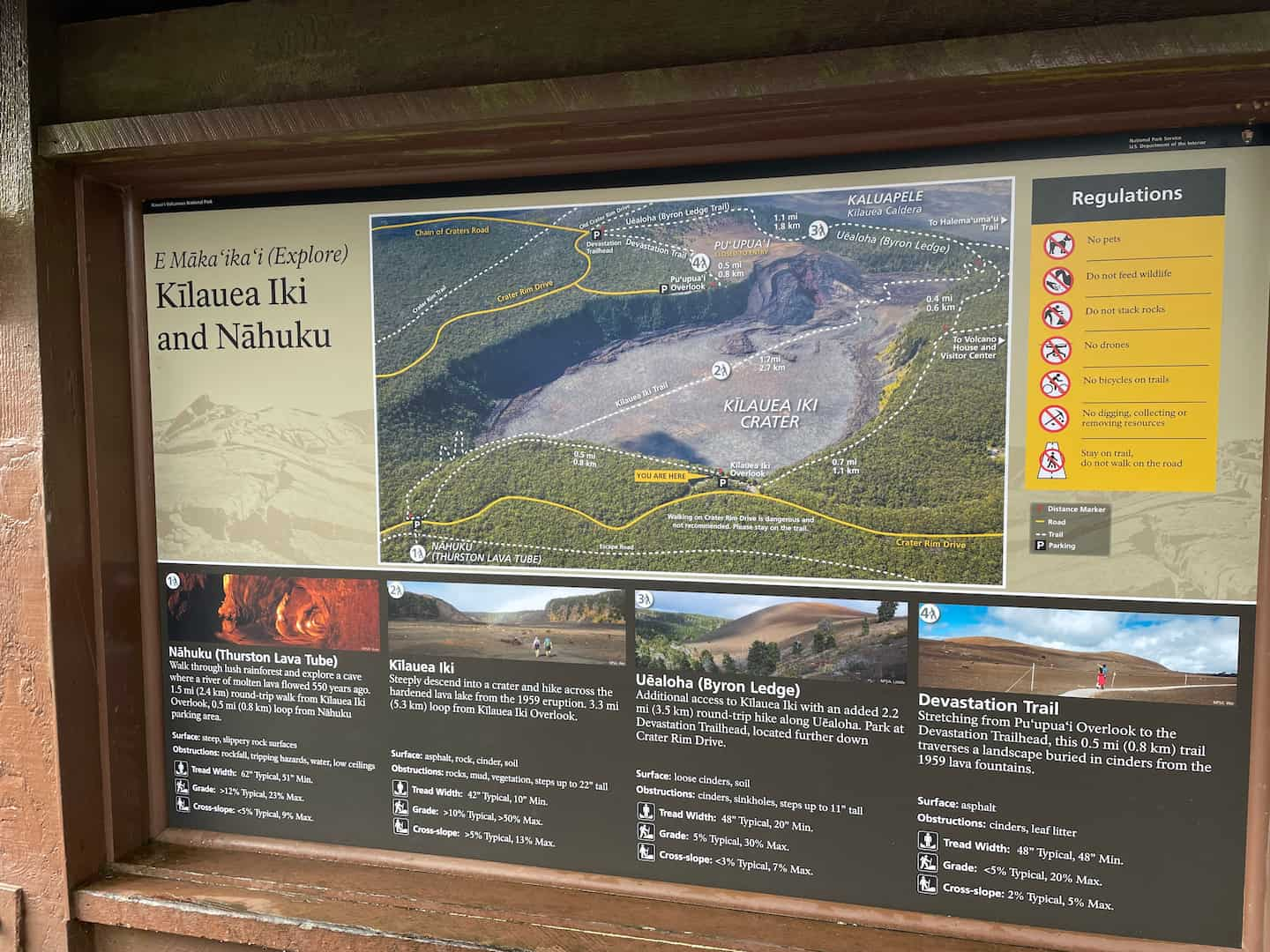
The Kīlauea Iki Trail trail takes you through lush rainforest before descending to the floor of Kīlauea Iki crater, where a lava lake formed during the 1959 eruption. Today, you can walk across the hardened lava surface, surrounded by towering crater walls.
Look closely, and you’ll notice cracks in the rock, steam rising from parts of the crater floor, and plants gradually establishing themselves in this rugged landscape.
The full loop is approximately 3.3 miles and includes a steep descent and climb back to the rim.
Explore the Steam Vents and Sulphur Banks
The Steam Vents area offers another fascinating look at the volcanic forces beneath Kīlauea. Rainwater seeps into the ground, encounters hot rock, and returns to the surface as steam.
Nearby, the Sulphur Banks area features mineral deposits and volcanic gases that create a landscape quite different from the surrounding rainforest.
These areas are interesting even without an eruption, but they also require some caution. Volcanic gases can be hazardous, particularly for people with respiratory or heart conditions, pregnant visitors, infants, and young children. Follow posted warnings and avoid restricted areas.
Drive Chain of Craters Road
If you have more than a couple of hours in the park, consider exploring Chain of Craters Road.
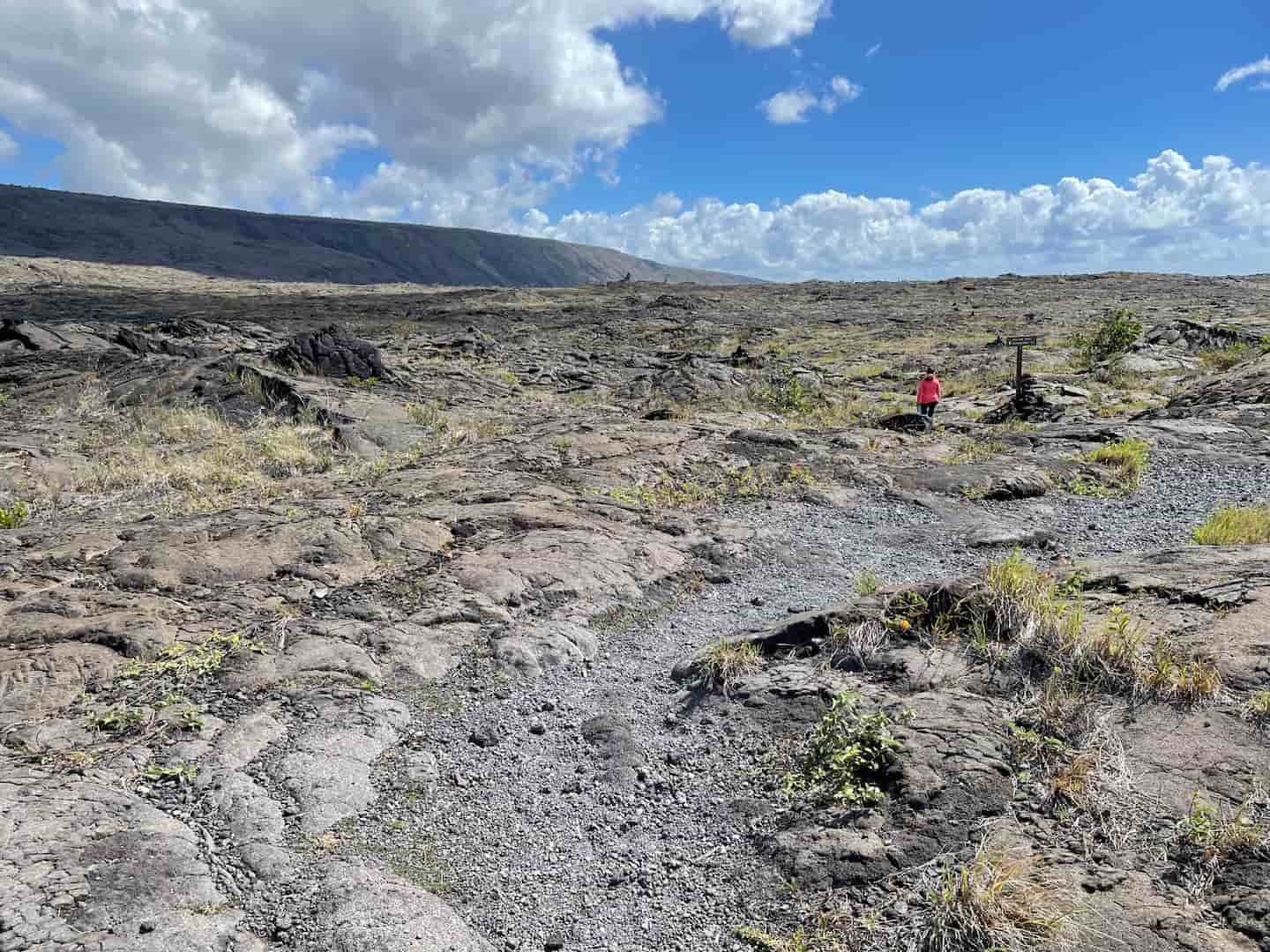
The drive takes you through different volcanic landscapes as the road descends toward the coast. Along the way, you’ll see old lava flows, volcanic features, and striking views of the surrounding terrain.
One of the most rewarding parts of the drive is seeing how vegetation changes across the lava fields. Some areas appear almost barren, while others show signs of plants slowly reclaiming the land.
The coastal section also offers a different perspective on the park, with rugged cliffs and the Pacific Ocean stretching into the distance.
Allow time for stops rather than treating this as a quick drive. There are limited services along the route, and the lower elevations can feel considerably warmer than Volcano Village.
Discover the Puʻuloa Petroglyphs
Along Chain of Craters Road, you’ll find one of the park’s most culturally significant sites: Puʻuloa Petroglyphs. This area contains thousands of images carved into the hardened lava, making it one of the largest known concentrations of petroglyphs in Hawaiʻi. The carvings offer a connection to Native Hawaiian history and traditions, reminding visitors that this landscape holds deep cultural importance beyond its volcanic features.
Explore the Kahuku Unit
Located on the southern slopes of Mauna Loa, the Kahuku Unit offers a different perspective on the park. Instead of the busy summit area around Kīlauea, you’ll find open grasslands, native forests, old lava flows, and trails that showcase another side of the Big Island’s volcanic landscape.
You can choose from shorter walks or longer hikes, depending on your interests and available time. Keep in mind that Kahuku is a separate section of the national park, accessed from Highway 11 near mile marker 70. It’s not connected to the Kīlauea summit area by an internal park road, so plan it as a separate outing rather than a quick stop during your visit.
Frequently Asked Questions About Visiting Hawaiʻi Volcanoes National Park
Is Hawaiʻi Volcanoes National Park worth visiting on a rainy day?
Absolutely! Rain and mist are common around Volcano Village, and the rainforest can be especially beautiful in wet weather. Clouds may obscure crater views, and trails can become slippery, so it’s best to stay flexible. Consider a scenic drive along Chain of Craters Road or Crater Rim Drive if conditions allow. Bring a rain jacket, a warm layer, and sturdy shoes. For more ideas, read our guide to enjoying a rainy day in Volcano.
How much time should you spend at Hawaiʻi Volcanoes National Park?
We recommend at least one full day, although you can see several highlights in half a day. With limited time, focus on the summit overlooks and Nāhuku (Thurston Lava Tube). A full day allows you to explore Chain of Craters Road and enjoy some shorter walks. If you’re interested in longer hikes like Kīlauea Iki, photography, or exploring more remote areas, consider two days.
One advantage of staying in Volcano Village is that you don’t have to make the long drive from the Kona side of the island each time you want to explore. You can enjoy the park during the day, return to your accommodations, and plan another visit if the weather or volcanic conditions change.
Is Hawaiʻi Volcanoes National Park worth visiting at night without lava?
It can be, especially if you enjoy stargazing, but don’t expect to see a volcanic glow when there’s no visible eruption. Clear skies can offer beautiful views of the stars, although clouds and moonlight affect visibility. If you visit after dark, bring a flashlight, dress warmly, and check which areas are accessible. For first-time visitors, we generally recommend exploring during daylight so you can fully appreciate the volcanic landscapes.
So, Is Hawaiʻi Volcanoes National Park Worth It Without Lava?
Absolutely. Visible lava may be what first captures your interest, but it’s only one part of what makes Hawaiʻi Volcanoes National Park worth visiting.
The rainforest, lava tubes, vast craters, steaming ground, and coastal lava fields tell the story of an island that continues to change. You don’t need to witness an eruption to appreciate that story.
Plan your visit around the experiences you can enjoy regardless of volcanic activity. Check conditions before you go, give yourself time to explore, and let the possibility of seeing lava be an added surprise rather than the measure of a successful trip.
Book Your Stay and discover why Volcano is worth visiting, with or without lava!