
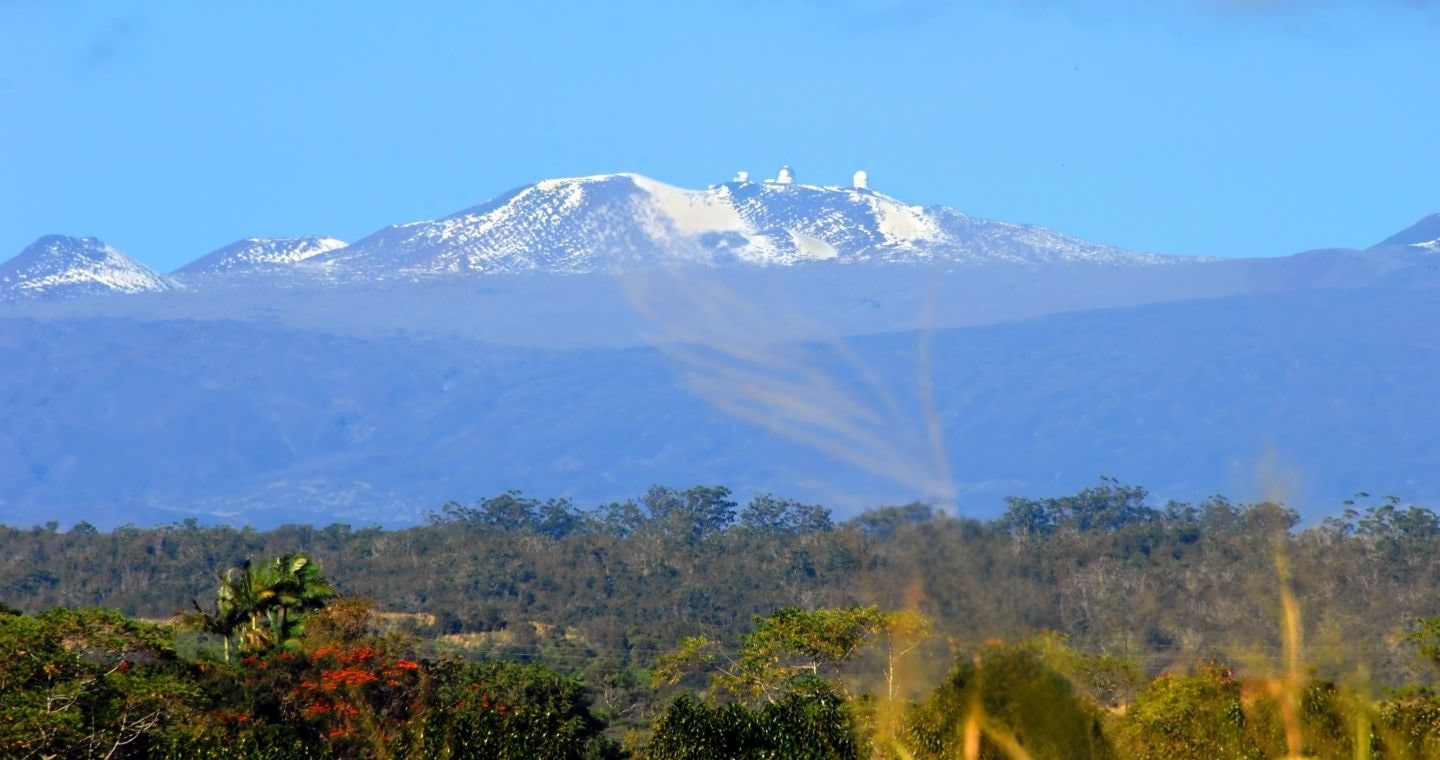
Winter in Hawaiʻi feels different on each island, and the Big Island offers the widest range of seasons in one place. Along the coasts, the days stay warm and bright, but up in Volcano Village, the air turns cool and clear, the rainforest grows even greener, and the high summits collect snow. Travelers who want quiet moments, cozy nights, and direct access to Hawaiʻi Volcanoes National Park find winter to be one of the most rewarding times to visit.
If you’re staying with us at our Big Island bed and breakfast this winter, here’s what you can expect:
What is the Weather Like in Hawaii During Winter?
The Big Island’s winter weather is as diverse as its landscapes. Unlike the mainland’s harsh cold snaps and icy storms, winter in Hawaii means mild temperatures, occasional rain showers, and dramatic microclimates that can shift within a single drive.
At sea level, daytime temperatures hover comfortably between 70°F and 80°F along the Kona and Kohala coasts. The water stays warm enough for swimming year-round, typically around 75°F to 77°F. But climb up to Volcano Village at 4,000 feet elevation, and you’ll find something a little different.
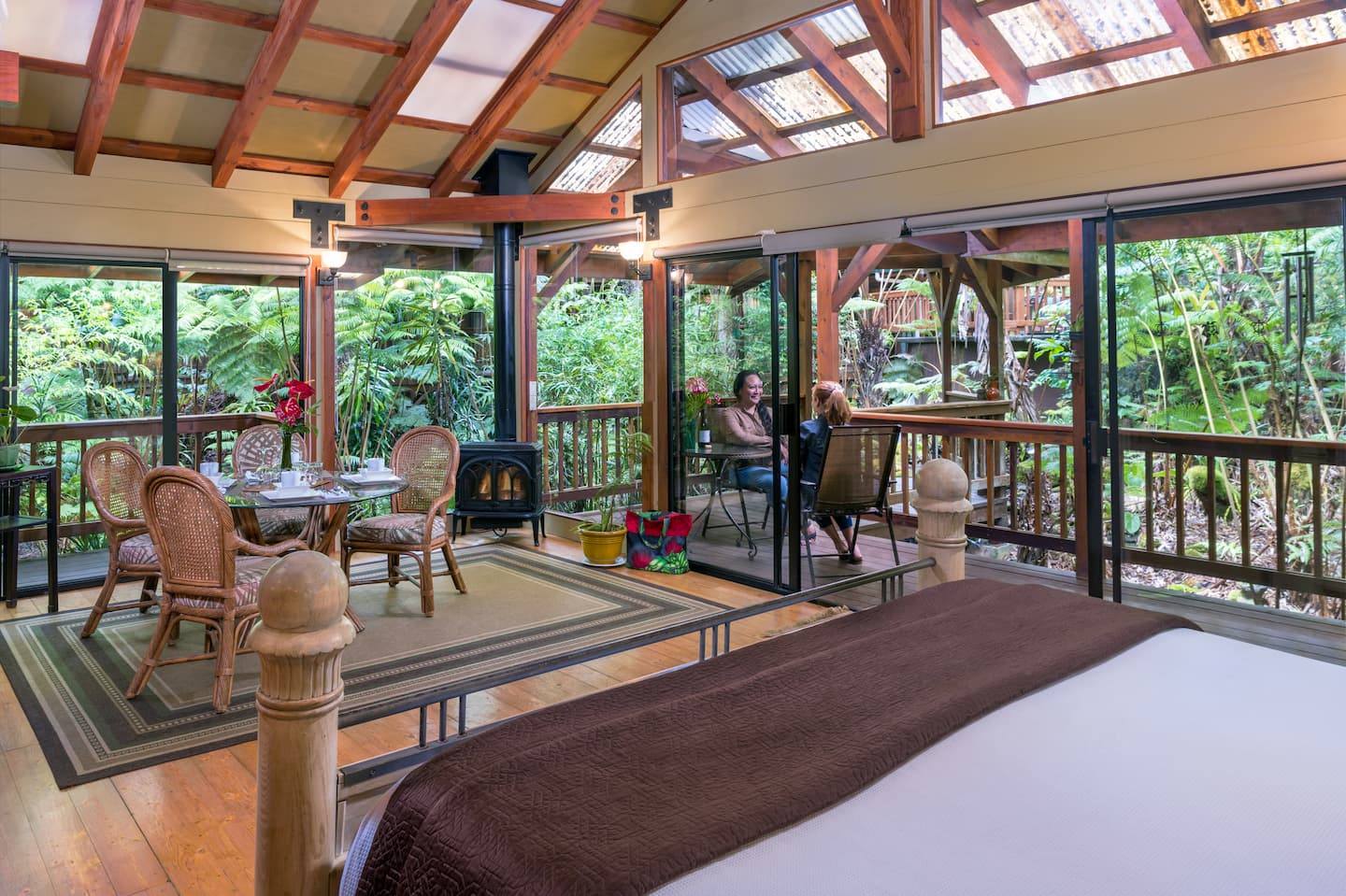
Winter mornings in the rainforest often start in the low 50s, with mist drifting through the ʻōhiʻa trees and a crispness to the air, making a hot cup of locally grown tea taste even better on your private lanai. Daytime highs reach the comfortable mid-60s to low 70s, perfect for hiking through Hawaii Volcanoes National Park without overheating. Evenings can dip into the 40s, inviting you to use your in-room fireplace.
Rain is more frequent during winter months, but on the Big Island, this varies dramatically by location. The Hilo side and the Volcano area receive more frequent passing showers, which keep our rainforest lush and vibrant.
Does It Snow in Hawaii?
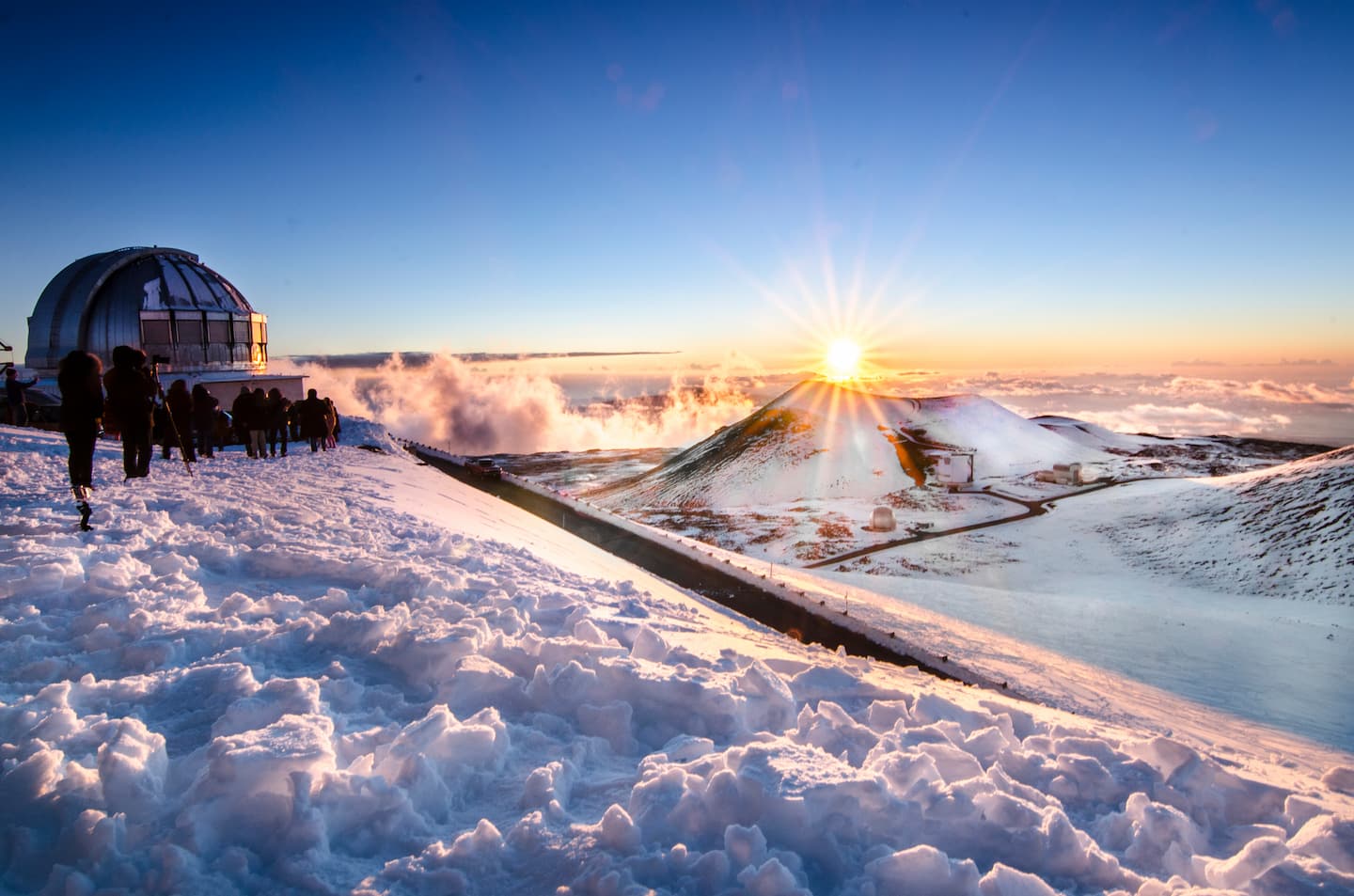
Yes, it absolutely does. While you won’t find snow on the beaches, you will find snow-capped summits of Mauna Kea and Mauna Loa. These 13,000+ foot peaks receive snowfall several times each winter, beginning in mid-November.
Mauna Kea, which means “white mountain” in Hawaiian, lives up to its name during the winter. Snow can accumulate several feet deep at the summit, occasionally closing the access road and creating conditions suitable for, believe it or not, sledding and snowball fights. Local families sometimes make the drive up with boogie boards to slide down the volcanic slopes, turning the mountain into an impromptu snow park. Just be aware that sledding down the mountain can be very dangerous as you reach high speeds.
What Should I Pack for Hawaii During Winter?
Packing for winter on the Big Island depends on where you plan to spend most of your time. Along the coasts, you will still want light clothing for warm days and time by the water. For Volcano Village specifically, you can pack light but keep these tips in mind:
Layers are essential. The temperature difference between Volcano Village and the coast can be 20 to 30 degrees, so versatile clothing makes all the difference. Pack lightweight long-sleeve shirts, a fleece or sweater, and a rain jacket that can double as a windbreaker.
Bring comfortable pants or jeans for cool mornings and evenings. While you’ll still want shorts and t-shirts for daytime exploration, you’ll appreciate having warmer options when temperatures dip.
Footwear should include closed-toe shoes with good traction for hiking. Winter rains can make trails muddy, and waterproof hiking boots or shoes will keep your feet comfortable. Bring sandals or flip-flops for beach visits and casual wear around town.
Don’t forget sun protection, even in winter. The Big Island’s sun remains strong year-round, and UV exposure increases at higher elevations. Pack reef-safe sunscreen, sunglasses, and a hat for outdoor adventures.
Rain gear is practical but doesn’t need to be heavy-duty. A lightweight, packable rain jacket usually suffices. At Volcano Village Lodge, each room has an umbrella available for guests, perfect for short walks to breakfast or evening strolls through the property.
If you’re planning to visit Mauna Kea’s summit during your stay, you’ll need serious cold-weather gear. Think winter coat, gloves, warm hat, and layers. The summit can drop below freezing, especially after sunset during stargazing tours.
What is There to Do in Winter in Hawaii?
Winter on the Big Island opens up experiences you simply can’t have during other seasons. Here are some of the best activities close to Volcano Village Lodge:
Whale Watching Season
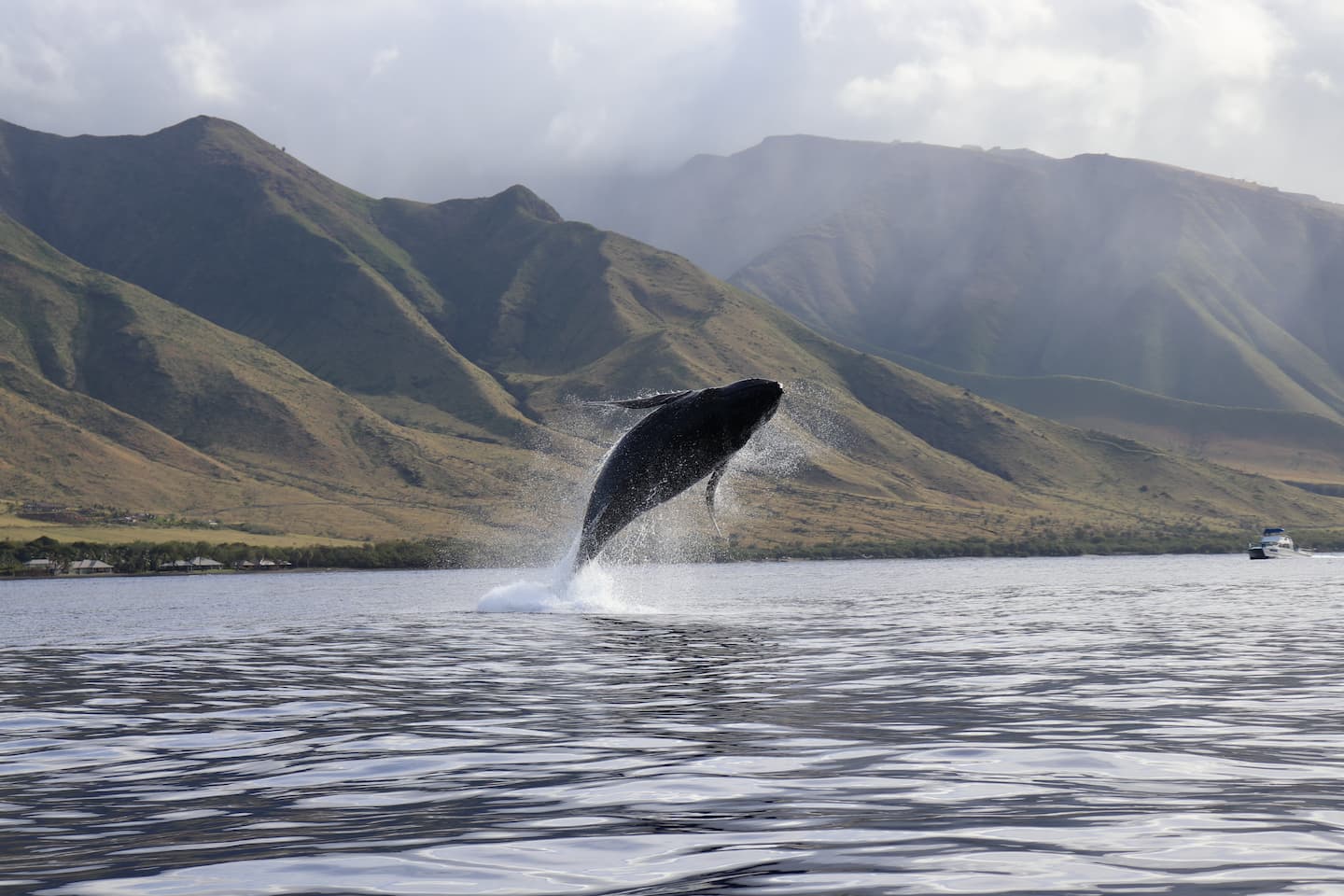
Winter brings one of nature’s most moving spectacles: whale watching on the Big Island. Each year between December and April, thousands of these majestic creatures travel from Alaskan waters to Hawaiʻi to breed, give birth, and nurse their calves.
From the shores of the Puʻukoholā Heiau National Historic Site, you can often spot spouts, breaches, and tail slaps without even boarding a boat. You’ll want binoculars, and if you’re staying with us, you’ll find a pair waiting in your room.
For a closer encounter, book a boat, kayaking, or snorkeling tour from Kona or Kohala. Reputable operators follow strict guidelines to avoid disturbing the whales while still providing unforgettable views. Hearing a humpback’s song through a boat’s hydrophone is a deeply moving experience that connects you to these magnificent creatures in ways photos never could.
Explore Hawaii Volcanoes National Park
Hawaiʻi Volcanoes National Park is remarkable in every season, but winter brings a calm that many visitors appreciate. Trails feel quieter, parking areas fill more slowly, cooler temperatures make hiking more comfortable, and the increased rainfall keeps waterfalls flowing and vegetation vibrant.
Near Halemaʻumaʻu Crater, the steam vents become especially striking in winter. The cool air makes the rising steam more visible, creating tall white plumes that drift across the landscape. Many guests enjoy visiting these spots early in the day or just before sunset, when the light softens and the views feel even more peaceful.
Discover Waterfalls at Their Peak
Hawaii’s winter rains feed the island’s waterfalls, making for more powerful flows and stunning scenery. Akaka Falls State Park showcases the 442-foot Akaka Falls surrounded by lush tropical vegetation. The short loop trail leads through bamboo groves and past the smaller but equally beautiful Kahuna Falls.
Rainbow Falls in Hilo also flows more powerfully in the winter, and if you time your visit for morning light, you might catch the rainbow that gives the falls its name.
Warm Up With Local Coffee and Tea
Winter is harvest season for Big Island coffee, making it an ideal time to visit coffee farms and taste the freshest beans. Several farms in Volcano also grow and process tea, offering tours where you can see the entire process from field to cup.
Visit Tea Hawaii & Company for their garden tour and tasting, or stop by Hawaii Forest Farms to learn about māmaki, a native Hawaiian tea plant with powerful antioxidants.
Stargaze from Mauna Kea
Winter offers some of the year’s best opportunities for stargazing in Hawaii. While summit access requires preparation and proper cold-weather gear, the visitor information station at 9,200 feet offers excellent stargazing opportunities without the altitude challenges of the summit.
On clear winter nights, the Milky Way stretches across the sky with breathtaking clarity. Local astronomy tour companies provide telescopes, warm jackets, and expert guides who can point out constellations, planets, and deep-sky objects visible only from Hawaii’s dark skies.
Experience Hawaiian Culture and Arts
Winter brings numerous cultural events and festivals to the Big Island. The annual Merry Monarch Festival applications open in winter (the festival itself happens in spring), and many hālau (hula schools) increase practice sessions and demonstrations at Volcano Art Center.
Volcano Village’s Hawaiian art galleries and studios also stay open year-round, offering a cozy retreat on rainy afternoons. Browse pottery, paintings, and crafts inspired by the volcano and rainforest, often meeting the artists themselves.

Relax and Recharge this Winter in Hawaii
Sometimes the best part of winter is the chance to slow down. At Volcano Village Lodge, we invite you to embrace a quieter pace. Light your fireplace, settle in with a good book, and listen to rain pattering on the lanai roof. Watch native birds flit through the trees outside your window, or sip local wine while watching mist drift through the rainforest canopy. Enjoy a leisurely breakfast without rushing off to the next attraction, or book an in-room massage to warm tired muscles after a day of hiking.
A winter stay in Volcano Village lets you experience a side of Hawaii many travelers miss. Snow-capped mountains, clear night skies, rainforest views, and peaceful nights by the fire all come together in this season. Book your winter stay and discover why Hawaii during winter might just become your favorite time to visit.